
Flowering plants · A little practice · 6 min
Make another bougainvillea without rushing a cutting
Use simple layering to root a low branch while it is still attached.
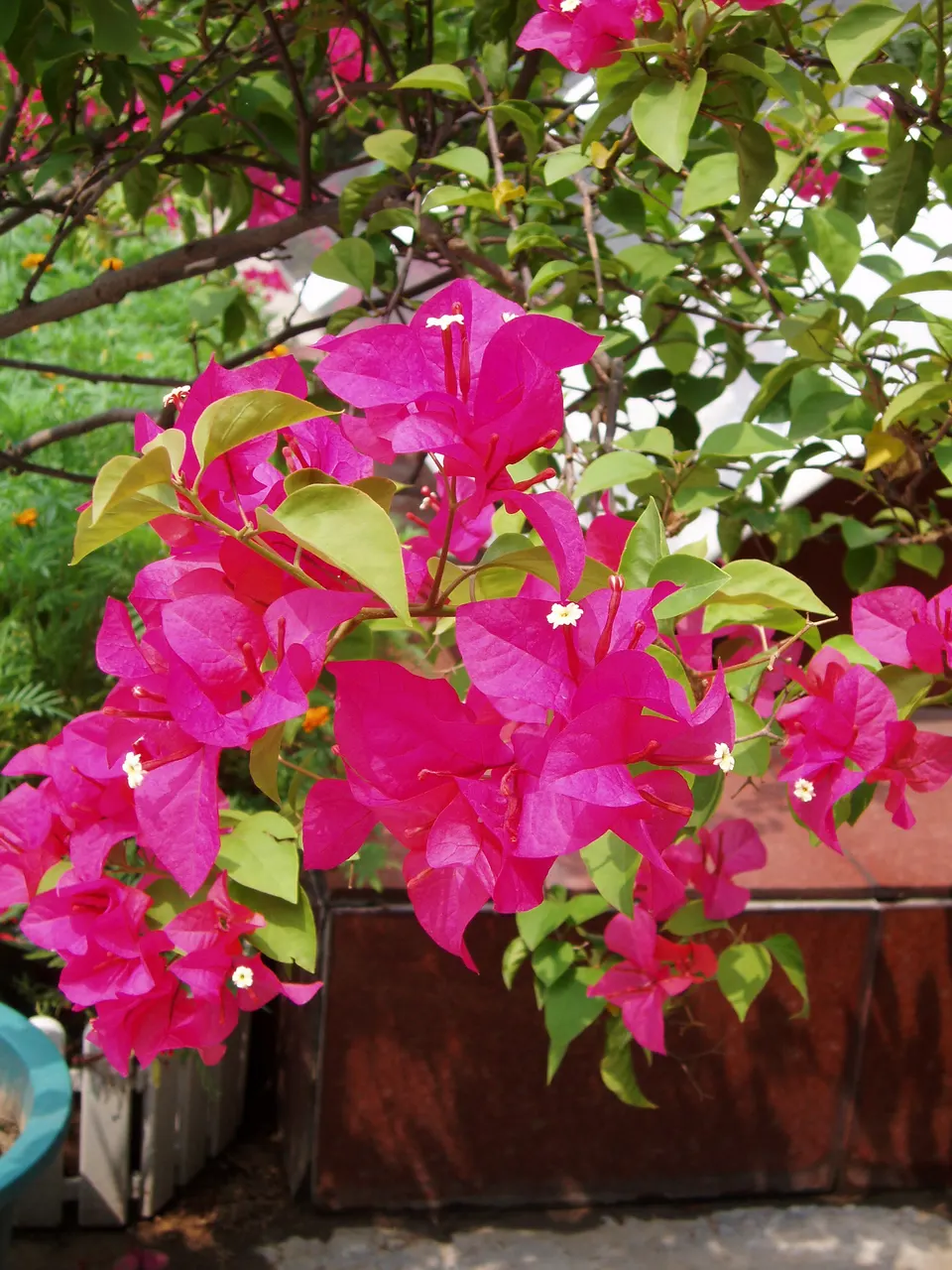
Reference photograph: Fanghong · CC BY-SA 3.0. Display may be cropped. Not the offered plant or packet.
By Growhood · Updated
Watch the technique
Follow this article's GCC timing and care advice alongside the demonstration.
General technique, not a species-specific tutorial
Understanding plant propagation by layeringBy OKGardeningClassics on YouTubeA general layering lesson, not a bougainvillea-specific demonstration. It explains rooting while attached to the parent. Use this article for the bougainvillea-specific steps, thorn protection and local care.
Video notes
Links only, with no embedded player or autoplay. Video link checked .
Opens YouTube in a new tab.
Growing instructions
- 01
Choose layering for a suitable parent
Bougainvillea is familiar in Gulf gardens, but a mature plant's heat tolerance does not make a new cutting heat-proof. Simple layering keeps the branch supplied by its parent while roots develop. Choose a healthy plant with a low branch that can bend gently to soil level. Do not force a brittle stem.
- 02
Prepare a small rooting spot
Set a drainage pot of lightly moist, airy mix beside the parent, or prepare a small patch of suitable soil beneath it. Select a section of stem with a node that will reach the mix while the leafy tip remains above it. Wear gloves and long sleeves to avoid the thorns.
- 03
Peg the stem in place
Remove leaves only from the short section that will be buried. Bend it into contact with the mix and secure with a peg, covering the node with a shallow layer of mix. Keep the branch attached to the parent and the growing tip exposed. Do not constrict the stem with tight wire.
- 04
Maintain contact and wait for real roots
Keep the rooting area lightly moist, not flooded, and check that the stem stays in place. Shield the small rooting pot from overheating. This is a slow project, often taking months. Flowers or fresh leaves on an attached branch do not prove it has its own roots; inspect carefully for a developed root system before cutting.
- 05
Separate gently and grow on
Once a substantial root system is present, cut the connection on the parent side with clean secateurs. Lift with the root ball supported and disturb roots as little as possible. Keep in bright shelter during recovery, then acclimate gradually. Wait for independent healthy growth before passing it on.