
Native trees · Patient beginner project · 6 min
Qatar: a sidr seedling for the next generation
Ziziphus spina-christi, the familiar sidr or sidra tree with deep regional roots.
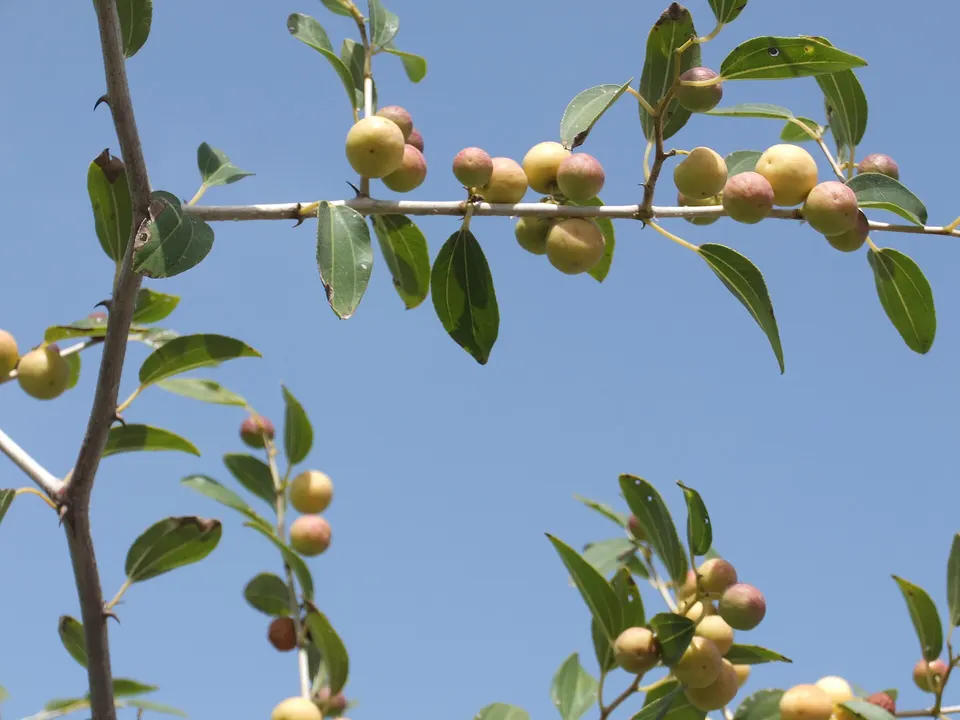
Reference photograph: Davidbena · CC BY-SA 4.0. Display may be cropped. Not the offered plant or packet.
Species reference photograph, not necessarily taken in the featured country. Country spotlights are not claims of exclusive native range.
By Growhood · Updated
Growing instructions
- 01
Meet Qatar's familiar shade tree
Sidr, also called sidra, is a native regional tree closely associated with Qatar's landscape and cultural life. Qatar's Ministry of Culture records its importance as a shade tree in neighborhoods and public spaces. This guide concerns Ziziphus spina-christi, not every fruit tree sold as jujube or ber. Check the name because related cultivated species have different growth and fruit characteristics.
- 02
Start with a permitted seed source
Ask a reputable local nursery for correctly identified seed or for ripe fruit from a cultivated tree whose owner permits collection. Remove all soft fruit flesh and wash the remaining hard stone. Discard damaged or mouldy material. A stone contains the seed and is not the same as a bare seed; ask which form your supplier is providing.
- 03
Begin with the less risky treatment
A room-temperature water soak of about 24 hours is a simple starting point for untreated clean stones, followed by prompt sowing. Research shows variable results and no universal treatment. Cracking the stone can help in nursery trials but can also crush the enclosed seed or injure fingers. For a home project, use pre-prepared nursery seed or accept slower, uneven germination rather than using a hammer or concentrated acid.
- 04
Give each seedling space for roots
Sow in separate deep drainage pots, covering according to the seed supplier's instructions. Keep in bright shelter with lightly moist mix and good drainage. Do not repeatedly uncover the stones to check them. As seedlings develop, introduce more outdoor light gradually and move them on before roots become cramped. Label the sowing date so a slow batch is not discarded too early.
- 05
Share a tree, not a fruit guarantee
Wait for healthy growth and a stable root ball before giving away a seedling. Seed-grown trees vary and will not necessarily reproduce the parent's fruit size or quality; named fruit selections may need specialist grafting. Agree on a suitable outdoor location and aftercare. Keep thorns clear of walkways, and get siting advice for roots and eventual canopy spread.