
Flowering plants · Beginner friendly · 7 min
Mexican petunia: grow a new plant from a cutting
Ruellia simplex, often known as Mexican petunia. Grow it in an outdoor pot with Gulf heat protection and care to prevent unwanted spread.
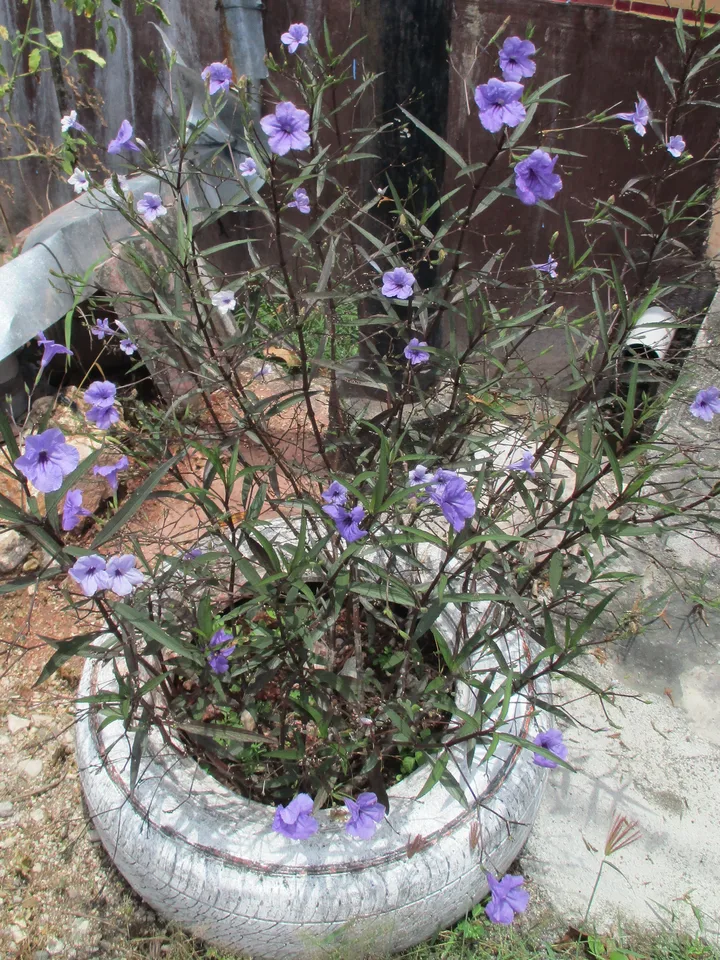
Reference photograph: David E Mead, resized · CC0. Display may be cropped. Not the offered plant or packet.
By Growhood · Updated
Watch the technique
Follow this article's GCC timing and care advice alongside the demonstration.
- Mexican petunia: care and propagation through cuttingsBy Regrow Roots on YouTube
Video notes
A water-rooting companion for Mexican petunia stem cuttings. Use the article for potting on, Gulf heat protection and containment. The video's growing conditions are not a GCC seasonal guide, and easy rooting is not a reason to release this spreading plant outdoors.
Links only, with no embedded player or autoplay. Video link checked .
Opens YouTube in a new tab.
Growing instructions
- 01
Know your Mexican petunia before making more
This guide is for Ruellia simplex, the flowering ornamental often called Mexican petunia and also sold as Ruellia brittoniana. Ruellia is a large genus, so do not assume every plant with that name needs identical care. Despite its common name, it is not the bedding Petunia grown as a seasonal flower. Check the identity with a nursery if unsure. It is not native to the GCC. It can spread through seed and creeping stems; read the containment advice before deciding to propagate it.
- 02
Choose a mild spell and a healthy parent
An established Mexican petunia tolerating a sunny Gulf garden does not mean an unrooted cutting can tolerate the same exposure. In many lowland GCC cities, a mild period from autumn to spring is easier to manage than peak summer. Local conditions differ, especially in highlands and southern Oman. Avoid very hot, windy days, cold nights and a wilted or pest-affected parent. Take just a few cuttings for planned, contained homes rather than producing a large surplus.
- 03
Take a short stem cutting with nodes
Choose a healthy, non-flowering shoot and cut roughly 10 to 15 cm from its tip, making the lower cut just below a node, the joint where leaves meet the stem. Keep several nodes on the cutting. Remove flowers, buds and leaves from the lower half, leaving a few upper leaves. Put the cutting in shade promptly so it does not dry out. A loose leaf or flower alone is not a substitute for a stem cutting.
- 04
Root in a pot, or try a small water cutting
For a potted start, moisten fresh, free-draining cuttings mix, make a hole and insert the bare lower stem with at least one node beneath the surface. Firm gently and let excess water drain. Keep the mix lightly moist, not permanently waterlogged. Ruellia cuttings can root without hormone. Water rooting is another option: stand the bare lower nodes in a clean jar of water with all leaves above the waterline. Refresh the water regularly and whenever cloudy. Discard a cutting with a soft, rotting base rather than passing it on.
- 05
Give bright shelter, not a hot windowsill
Place the pot or jar in bright indirect light with gentle airflow. Keep it away from direct AC blasts, hot glass and outdoor midday sun. A jar can heat up quickly on a balcony. Check moisture daily, adjusting to drying rather than following a fixed watering schedule. Fresh leaves are encouraging but do not prove that a cutting has enough roots to live independently. Wait for a developed root system; rooting speed varies with temperature, stem condition and method.
- 06
Pot on, acclimate and share with a care label
When a water-rooted cutting has several developed roots, transfer it carefully into a small drainage pot of suitable potting mix. Keep it lightly moist while it adjusts, without leaving the pot standing in water. For a mix-rooted cutting, move it on once roots hold the small root ball together. Introduce outdoor morning light gradually while protecting the young plant from afternoon heat. Grow it on until it is firm, healthy and making independent growth. Share it as an outdoor container plant with its identity, propagation method, light history and spread precautions.